
Planning
How much does the Everest Base Camp trek cost?
The price on a trek page is only part of the answer. This is everything the Everest Base Camp trek costs, line by line: what a guided trip covers, what you pay on top, and the small daily costs that add up on the trail.


The short answer
A guided Everest Base Camp trek of about two weeks, Kathmandu to Kathmandu, is one price that covers the big costs: the Lukla flights, both permits, a licensed guide and porters, teahouse rooms and three meals a day on the trail. On top of that you pay for your flights to Nepal, your visa, travel insurance, tips for the crew, and cash for small things on the trail. Our own trip price, and what drops when more of you share the guide, is on the Everest Base Camp trek page.
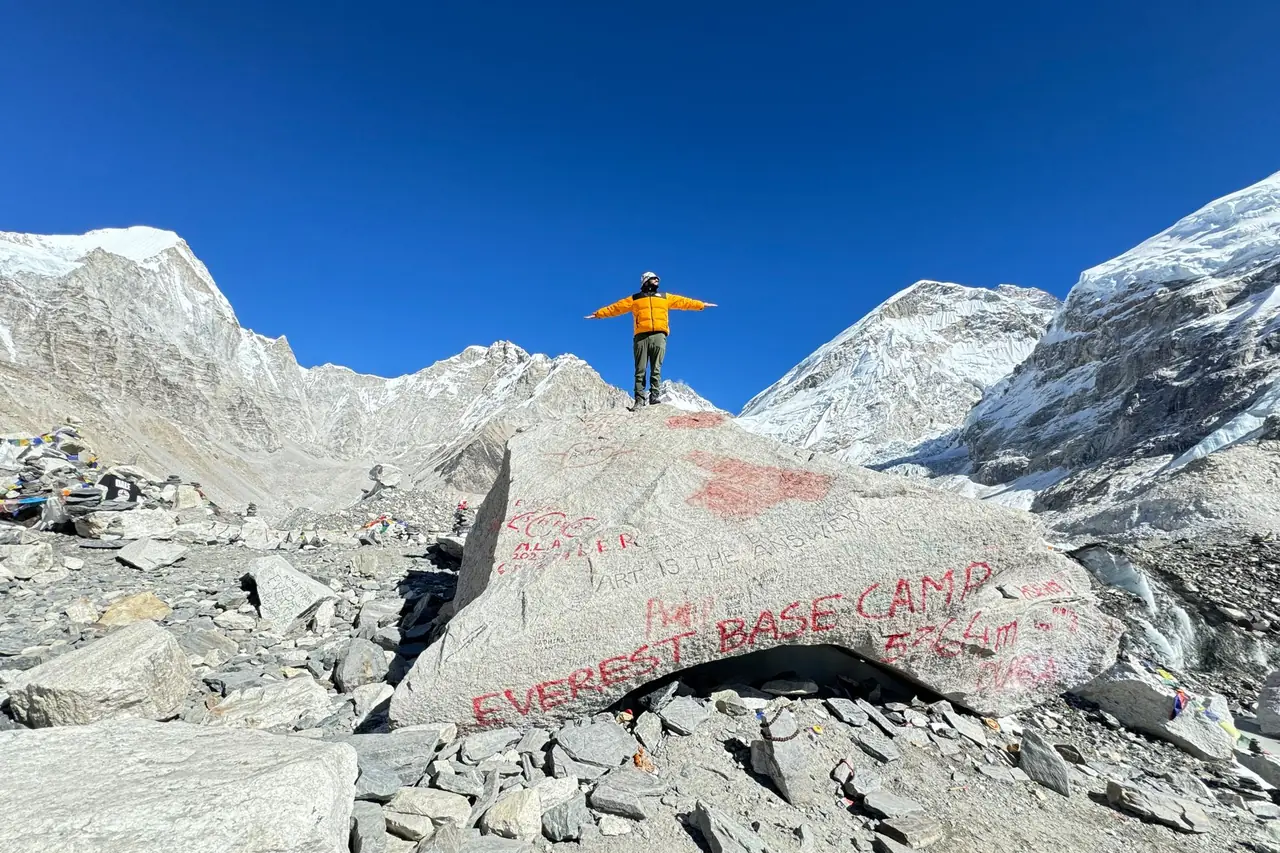
What a guided trip includes
These are the costs that sit inside the trip price. If you compare operators, check every line, because a cheap headline price often leaves one of them out.
| Cost | Why it matters |
|---|---|
| Return flights to Lukla | The biggest single cost on the trek. 2026 quotes for foreigners run from about USD 215 to 290 each way. |
| Sagarmatha National Park permit | NPR 3,000 per foreign trekker per entry, from the Nepal Tourism Board's published rates. |
| Khumbu Pasang Lhamu municipality fee | The local fee on the way in. Reports put it at NPR 2,000 to 3,000; it changes, so check before you go. |
| A licensed guide | Wages, food, lodging and insurance for the whole trek. |
| Porters | One for every two trekkers on our trips, carrying up to 20 kg between two. |
| Teahouse rooms | A twin room every night on the trail. |
| Meals on the trek | Breakfast, lunch and dinner. Food is the cost that rises most with height. |
| Kathmandu nights and transfers | Hotel nights with breakfast, and the airport pick-ups. |
The permit and flight figures above are the published or commonly quoted rates for 2026. They are set by the national park, the local government and the airlines, not by us, so treat them as a guide to what is inside a trip price rather than a quote.
What you pay on top
Getting there
International flights to Kathmandu are the cost that varies most, by season and where you fly from. Book early for October and April.
The Nepal tourist visa is bought on arrival or online before you travel: USD 30 for 15 days, USD 50 for 30 days and USD 125 for 90 days, according to most 2026 guides. A two-week trek with a spare day fits in the 30-day visa. Check the current fees on the Department of Immigration's site before you go.
Travel insurance
This is not optional. You need a policy that covers trekking up to 5,700 m, including helicopter rescue and medical evacuation. Many standard policies stop well below that height, so the right one costs more than a beach holiday policy. Our guide to travel insurance for trekking in Nepal explains what to look for in the small print.
Tips
Tips are customary and are given at the end of the trek, usually by the group together. Many trekkers budget around 10 to 15 percent of the trip price for the whole crew, with more for the guide than for each porter.
Cash on the trail
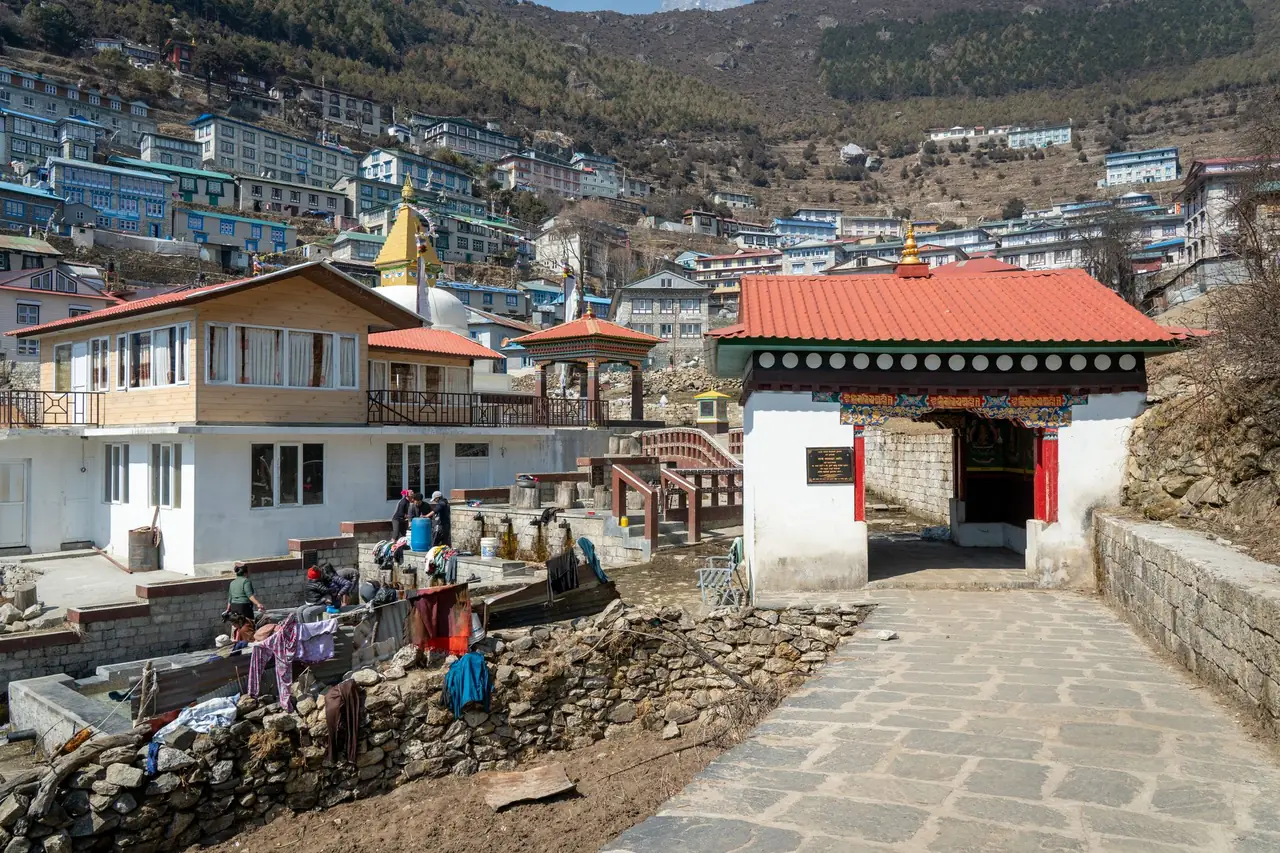
Above Namche almost everything costs a little more at every stop, because it is carried up on backs or by yaks. Bring Nepali rupees in cash for:
- hot showers, which cost extra in most lodges above Namche
- charging your phone and camera
- Wi-Fi, often sold as a prepaid card that works across several villages
- bottled or boiled water, tea, snacks and the odd bakery cake in Namche
Cash machines exist in Lukla and Namche but are not always working. Take out what you need in Kathmandu.
Gear
You do not need to buy everything. Down jackets and sleeping bags can be hired cheaply in Thamel, Kathmandu's trekking district. Spend your money on boots that are already broken in. Our packing list covers what is worth buying and what is worth renting.
Where people get the budget wrong
- Flight delays. Weather often holds the Lukla flights. A spare day in Kathmandu costs a hotel night; missing your flight home costs far more. Our trip keeps a spare day for this reason.
- The cheapest guide. A guide and porters who are paid, fed and insured properly cost more. It is worth it: they are the people who decide when to wait and when to go down.
- Skipping rest days to save money. Every itinerary that saves a day does it by climbing faster, which is what makes people ill. Read altitude sickness on a Nepal trek before you compare itineraries by length alone.
- Forgetting the end. The walk out is three or four days. Budget your cash for the whole trek, not just the way up.
Is it cheaper to go without a guide?
On paper, yes: you pay for your own room, food and permits and nothing else. But since 2023 Nepal has required foreign trekkers in its national parks to walk with a licensed guide, and although the Everest region's local government has resisted the rule, the arrangement is not settled. Our article do you need a guide to trek in Nepal? sets out where things stand.
Ways to spend less
- Go as a group. On our trips the price per person falls as more people share the guide.
- Go in a quieter month. Late November and early December are often clear, cold and calmer on the trail. See Everest Base Camp in December.
- Choose a shorter trek with the same mountains. The Everest Panorama trek gives you the Everest view from Tengboche in about a week.
When you have a budget in mind, the Everest Base Camp trek page has the full day by day, the set departures and the price for your group size.


